Lockheed L-1011 TriStar Aircraft Wreck Dive Site in Aqaba
The Tristar Wreck Aqaba is one of the world’s most unique aircraft wreck dives, offering certified scuba divers the rare opportunity to explore a real Lockheed L-1011 passenger aircraft beneath the crystal-clear waters of the Red Sea. From its fascinating history and thriving marine life to incredible underwater photography opportunities, the Tristar Wreck Aqaba has become one of Jordan’s most unforgettable dive experiences.
It feels less like a dive and more like stepping into another world.
The Lockheed L-1011 TriStar Aircraft Wreck Dive Site in Aqaba is unlike almost any other dive site in the Middle East. Instead of exploring the remains of a ship, divers have the rare opportunity to swim through a real wide-body passenger aircraft that has become an artificial reef, creating an extraordinary combination of aviation history, marine conservation, underwater photography, and world-class wreck diving.
Since being intentionally submerged in August 2019, the TriStar has become one of Aqaba’s signature dive sites. Divers from around the world visit Jordan specifically to experience this remarkable aircraft, often combining it with nearby attractions such as the Hercules C-130, the Underwater Military Museum, the Cedar Pride Wreck, and the colorful coral reefs of South Beach.
Whether you’re fascinated by aviation, passionate about wreck diving, or simply looking for one of the most unusual scuba experiences in the Red Sea, the TriStar delivers a dive that few destinations can match.
Why the Lockheed L-1011 TriStar Became an Artificial Reef in Aqaba
Unlike many famous wreck dives around the world that sank because of accidents, storms, or wartime events, the Lockheed L-1011 TriStar followed a very different journey.
For years, this aircraft stood quietly at King Hussein International Airport in Aqaba after reaching the end of its flying career. Rather than allowing it to deteriorate on land, local authorities chose to give the aircraft a completely new purpose beneath the sea.
On 26 August 2019, the aircraft was carefully prepared, cleaned to environmental standards, and intentionally submerged in the Gulf of Aqaba. The project formed part of Jordan’s ongoing effort to expand its underwater attractions while protecting nearby natural coral reefs by creating additional artificial reef habitats.
Today, the aircraft has transformed from a retired commercial airliner into a thriving underwater ecosystem.
Its metal structure provides shelter for reef fish, hunting grounds for predators, resting places for moray eels, and growing surfaces for corals, sponges, and other marine organisms. Every year the wreck becomes more alive, gradually blending into the surrounding marine environment.
This transformation is exactly what makes the TriStar so fascinating.
Instead of watching an abandoned aircraft decay, divers witness nature reclaiming one of humanity’s greatest engineering achievements.
The Story Behind the Lockheed L-1011 TriStar
Long before becoming one of Aqaba’s most photographed dive sites, the Lockheed L-1011 TriStar was one of the world’s most advanced commercial airliners.
Developed by Lockheed during the late 1960s, the TriStar entered commercial service in the early 1970s and quickly became known for its innovative engineering, advanced autopilot systems, quiet cabin, and exceptional safety record.
Its most distinctive feature is impossible to miss underwater.
Unlike twin-engine passenger aircraft, the TriStar carries a third engine integrated into the base of the vertical tail, giving it a unique appearance that experienced divers and aviation enthusiasts recognize immediately.
The aircraft measured approximately 50 metres in length with a wingspan of nearly 50 metres, making it one of the largest passenger aircraft ever intentionally sunk as an artificial reef. Even underwater, its enormous size creates an unforgettable first impression.
Why Was the Aircraft Sunk?
Many first-time visitors ask the same question:
“Why would anyone sink a perfectly good passenger plane?”
The answer combines tourism, conservation, and sustainable diving.
Artificial reefs help reduce visitor pressure on natural coral reefs by providing exciting alternative dive sites. Rather than concentrating thousands of divers on fragile reef systems, purpose-built wrecks spread diving activity across multiple locations.
The TriStar has become exactly that.
Instead of damaging natural coral formations, divers now enjoy exploring a fascinating aircraft while marine life gradually colonizes its surfaces.
This approach has proven successful throughout Aqaba, where several intentionally submerged attractions—including military vehicles, the Hercules C-130 aircraft, and the famous Cedar Pride shipwreck—have become thriving marine habitats and internationally recognised dive sites.
Where Is the TriStar Wreck Located?
The Lockheed L-1011 TriStar rests off South Beach, Aqaba, only a short distance from several of Jordan’s most famous dive sites.
Its location allows dive centers to combine it with other spectacular sites during the same boat trip, creating one of the most exciting wreck-diving itineraries in the Red Sea.
Nearby dive sites include:
- Hercules C-130 Aircraft Wreck
- Underwater Military Museum
- Cedar Pride Shipwreck
- Seven Sisters
- Japanese Gardens
- First Bay North
- Power Station Reef
Because these sites are located relatively close together, divers can easily experience both aircraft wrecks and coral reefs in a single day, offering incredible variety during their visit to Aqaba.
TriStar Aircraft Dive Site Information
| Information | Details |
|---|---|
| Dive Site | Lockheed L-1011 TriStar Aircraft Wreck |
| Location | South Beach, Aqaba, Jordan |
| Dive Type | Primarily boat dive |
| Maximum Length | Approximately 50 metres |
| Wingspan | Approximately 50 metres |
| Depth Range | Approximately 15–30 metres |
| Visibility | Often 20–40 metres |
| Water Temperature | Around 21–28°C depending on season |
| Minimum Certification | Open Water Diver (for exterior); deeper or overhead exploration requires appropriate training and experience |
| Highlights | Cockpit, passenger cabin, wings, three engines, artificial reef, underwater photography |
Exploring the Lockheed L-1011 TriStar Wreck: What to Expect Underwater
Every wreck dive tells a story, but the Lockheed L-1011 TriStar Aircraft Wreck in Aqaba offers something few dive sites in the world can match. Unlike a shipwreck, where your mind naturally expects to see decks, masts, and cargo holds, descending onto a full-size passenger aircraft creates a completely different experience.
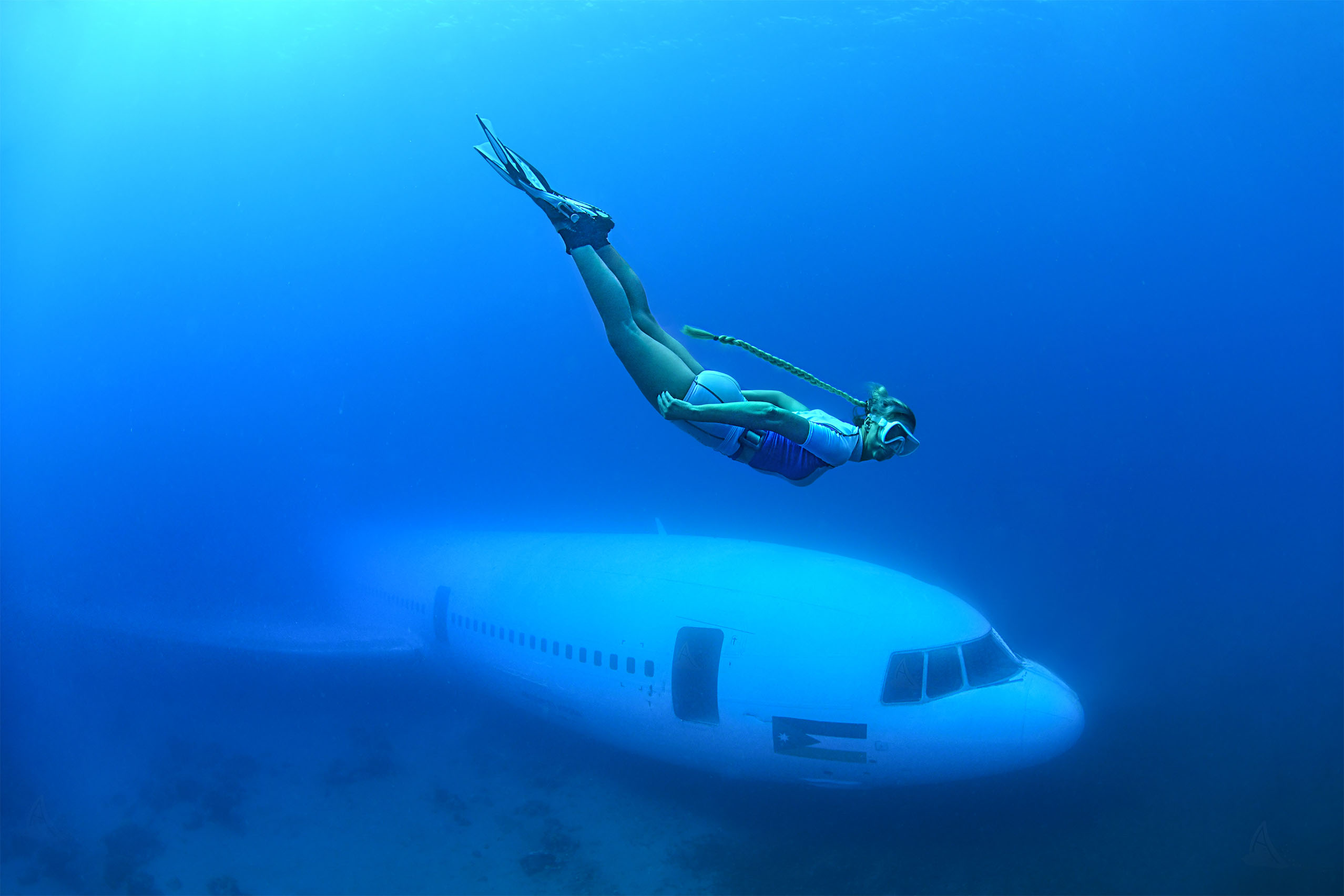
The first glimpse of the TriStar often surprises even experienced divers. Instead of coral formations appearing beneath you, a massive airliner gradually emerges from the blue water, its unmistakable silhouette becoming clearer with every metre of descent.
Although the aircraft has rested beneath the sea since 2019, it still looks remarkably recognizable. The wings stretch gracefully across the sandy seabed, the fuselage remains largely intact, and the distinctive third engine mounted in the tail instantly confirms that this is the legendary Lockheed L-1011 TriStar.
Many divers pause for a few moments before approaching. Seeing an aircraft underwater is simply something your brain isn’t prepared for.
Beginning the Dive
Most dive centers visit the TriStar as a boat dive, allowing divers to descend directly above the wreck. As you begin your descent, visibility in Aqaba is often exceptional, making the aircraft visible long before you reach the seabed.
One of the most exciting moments is watching the aircraft slowly take shape beneath you.
At first, it appears as a shadow.
Then the wings become visible.
Moments later, the nose, cockpit, and engines emerge from the blue water.
Because the aircraft rests on a sandy bottom with little surrounding reef, nothing distracts from its impressive size. The entire wreck dominates the underwater landscape.
For many divers, this first view becomes one of the highlights of their trip to Aqaba.
The Cockpit
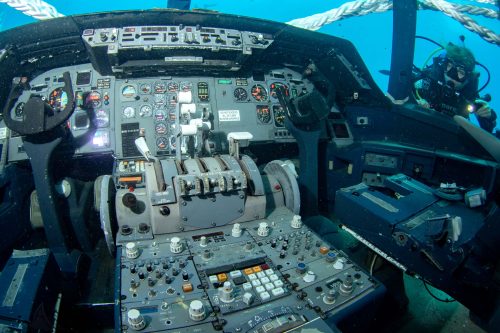
The cockpit is undoubtedly one of the most photographed parts of the aircraft.
Swimming toward the nose, divers can immediately recognize the cockpit windows that once overlooked thousands of kilometres of skies around the world. Now they frame schools of reef fish drifting peacefully through crystal-clear Red Sea water.
Depending on visibility and lighting conditions, sunlight often streams through the cockpit windows, creating dramatic beams of light that make this one of the finest underwater photography locations in Jordan.
Wide-angle photographers especially enjoy positioning divers beside the cockpit to emphasize the enormous size of the aircraft.
Unlike many older wrecks where corrosion has dramatically altered the structure, the TriStar still retains the unmistakable appearance of a modern passenger jet, making photographs instantly recognizable even to non-divers.
Swimming Along the Fuselage
Continuing along the aircraft’s body, divers begin to appreciate its true scale.
The fuselage stretches for around 50 metres, making this one of the largest artificial reef aircraft in the region.
Rows of passenger windows run almost the entire length of the cabin. Looking through them gives a fascinating perspective into the aircraft’s interior, where fish now occupy a space once filled with passengers crossing continents.
The clean lines of the aircraft contrast beautifully with the natural growth that has slowly begun covering its exterior.
Soft algae, small corals, and marine invertebrates continue to colonize the metal surfaces, proving how quickly nature transforms artificial structures into living reefs.
Every year the aircraft becomes slightly greener, slightly more colourful, and slightly more alive.
Entering the Passenger Cabin
One of the most memorable moments of the dive is exploring the inside of the aircraft.
The passenger cabin feels surprisingly spacious underwater. Sunlight enters through open doors, windows, and specially prepared access points, creating an almost surreal atmosphere inside the fuselage.
As your bubbles rise toward the ceiling, schools of glassfish and juvenile reef fish often move through the cabin, using the aircraft as shelter from larger predators.
The experience is completely different from swimming inside a shipwreck.
Instead of narrow corridors and steel walls, you’re surrounded by the unmistakable shape of an airliner that once carried travellers through the skies.
It’s one of those dives where nearly everyone pauses for a moment—not because there’s nothing to see, but because it’s difficult to believe where you are.
Important safety note: Penetrating any wreck should only be done if it is part of your training and experience, following your instructor or guide. Even where access points are open, divers should never enter enclosed spaces without the appropriate wreck-diving skills and procedures.
The Wings
The wings are among the most spectacular parts of the TriStar.
Stretching almost 50 metres from tip to tip, they provide excellent opportunities to appreciate the aircraft’s enormous scale.
Hovering above one wing while another diver swims beneath creates dramatic photographs that clearly show just how large the aircraft really is.
The smooth surfaces of the wings have become resting places for many reef fish, while occasional blue-spotted stingrays may be seen lying on the nearby sandy seabed.
Because the wreck rests in relatively calm conditions, the surrounding water often remains remarkably clear, allowing photographers to capture the full wingspan in a single frame.
The Three Engines
Perhaps the most distinctive feature of the Lockheed L-1011 TriStar is its three-engine design.
Unlike today’s twin-engine commercial aircraft, the TriStar carries two engines beneath the wings and a third integrated into the tail.
Underwater, this makes the aircraft instantly recognizable.
Many divers enjoy swimming beneath the wing-mounted engines before continuing toward the tail to admire the famous S-shaped air intake leading to the third engine.
This unique design is one reason aviation enthusiasts travel specifically to Aqaba to dive the wreck.
Few artificial reefs in the world allow divers to examine such an iconic aircraft so closely.
The Tail Section
Reaching the rear of the aircraft, the vertical stabilizer rises dramatically above the seabed.
The tail often creates one of the most striking underwater scenes on the dive.
Looking upward from beneath the tail, divers can frame the towering fin against the bright blue surface, creating images that perfectly capture the unusual combination of aviation engineering and marine beauty.
The tail also attracts schools of fusiliers, bannerfish, and other reef species that move gracefully around the structure.
When sunlight filters through the clear waters of Aqaba, this area becomes one of the most photogenic sections of the entire wreck.
Marine Life Around the TriStar
Although the aircraft is relatively young compared to older wrecks like the Cedar Pride, marine life has quickly adopted it as home.
During a typical dive, you may encounter:
- Lionfish sheltering beneath the wings.
- Blue-spotted stingrays resting on the sand.
- Moray eels hiding in protected openings.
- Glassfish filling darker sections of the fuselage.
- Groupers patrolling around the aircraft.
- Damselfish defending their territories.
- Butterflyfish and angelfish feeding around the growing reef.
- Occasional turtles passing nearby.
- Schools of barracuda or jacks in the blue, depending on the season.
As the artificial reef continues to mature, the biodiversity around the aircraft is expected to increase, making every visit slightly different from the last.
Underwater Photography Tips
The TriStar is widely regarded as one of the best underwater photography subjects in Aqaba. Because of its size and clear surroundings, planning your shots can make a big difference.
For wide-angle photography, start with the cockpit or the full wingspan. Including a diver in the frame helps show the true scale of the aircraft. Early afternoon often provides beautiful natural light, especially around the nose and cabin windows, where sunbeams can illuminate the interior.
If you’re interested in marine life, don’t focus only on the aircraft itself. Look closely around the wings, engines, and openings, where fish, nudibranchs, and small reef creatures often gather. These details tell the story of how nature is gradually transforming the aircraft into a living reef.
Above all, maintain good buoyancy. Avoid touching the wreck or disturbing the seabed, as even a small cloud of sand can reduce visibility for everyone and spoil the perfect photo.
Best Time to Dive the Lockheed L-1011 TriStar in Aqaba
One of the greatest advantages of diving in Aqaba is that the Lockheed L-1011 TriStar Aircraft Wreck can be explored throughout the year. Unlike many dive destinations that experience dramatic seasonal changes, the Gulf of Aqaba offers relatively stable conditions, making the wreck accessible in every season.
Each time of year, however, offers a slightly different experience.
Spring (March – May)
Spring is considered one of the best seasons for scuba diving in Aqaba. Water temperatures gradually warm from around 21–24°C (70–75°F), visibility is often outstanding, and marine life becomes increasingly active after winter.
Comfortable air temperatures and calm sea conditions make this an excellent time for both newly certified divers and experienced underwater photographers.
Summer (June – August)
Summer brings warm water temperatures of 26–28°C (79–82°F), allowing many divers to wear lighter exposure protection.
The exceptional visibility during summer often makes it possible to appreciate the aircraft’s full silhouette from above, creating spectacular panoramic views of the wreck.
Morning dives are especially enjoyable before the afternoon heat arrives.
Autumn (September – November)
Many local dive professionals consider autumn the finest diving season in Aqaba.
The sea remains warm after summer, underwater visibility is frequently excellent, and sea conditions are usually calm.
For photographers, this combination of warm water, clear visibility, and consistent sunlight provides ideal conditions for capturing wide-angle images of the aircraft.
Winter (December – February)
Winter offers quieter dive sites and fewer visitors.
Although water temperatures drop to approximately 21°C (70°F), visibility often remains excellent.
A suitable wetsuit allows comfortable diving throughout the season, and many divers enjoy having famous sites like the TriStar much less crowded than during peak holiday periods.
No matter when you visit Aqaba, the TriStar remains one of the city’s most rewarding wreck dives.
Who Can Dive the TriStar?
The Lockheed L-1011 TriStar Aircraft Wreck Dive Site is suitable for a wide range of certified divers.
Because much of the aircraft rests within recreational diving depths, many PADI Open Water Divers can comfortably explore the exterior of the wreck while remaining within their certification limits.
Divers with PADI Advanced Open Water or equivalent certifications often enjoy greater flexibility when exploring the deeper sections of the aircraft and combining the dive with nearby attractions.
If you’re visiting Aqaba without a diving certification, you can still experience the incredible underwater world through a Discover Scuba Diving program. While the full TriStar wreck isn’t suitable for first-time participants, many dive centers—including Aqaba Adventure Divers—can introduce beginners to nearby reefs before they continue their diving journey toward certification.
Is the TriStar Suitable for Beginner Divers?
This is one of the questions we hear most often.
The answer depends on your experience, confidence, and certification level.
For newly certified Open Water Divers, the TriStar is often one of the most exciting wreck dives they will ever complete. The aircraft is easy to recognise, the sandy seabed helps maintain orientation, and Aqaba’s generally calm conditions make the dive enjoyable for those with good buoyancy control.
However, exploring the inside of the aircraft is different from swimming around the exterior.
Although the cabin is open and prepared for divers, entering any overhead environment should only be done by divers who have received appropriate training or who are under the direct supervision of a qualified instructor. Proper buoyancy, awareness, and respect for wreck-diving procedures are essential.
For photographers, aviation enthusiasts, and recreational divers who simply want to admire the aircraft from the outside, there is more than enough to see without entering enclosed spaces.
Safety Considerations
The TriStar may appear calm and inviting, but like every wreck dive, it deserves respect.
The aircraft has been prepared for recreational diving, yet responsible diving practices remain essential.
Always dive within your certification limits, monitor your depth and air supply, and maintain excellent buoyancy throughout the dive. Avoid touching the aircraft, disturbing marine life, or kicking up sand inside the fuselage, as poor visibility can quickly affect the experience for everyone in the group.
If you choose to enter the aircraft, stay within clearly accessible areas and follow your dive guide or instructor at all times. Divers who wish to explore more complex overhead environments should first complete a recognised wreck diving specialty course.
At Aqaba Adventure Divers, our guides begin every wreck dive with a thorough briefing covering the planned route, maximum depth, communication signals, and emergency procedures. A well-planned briefing helps divers feel relaxed and allows them to enjoy the experience safely.
TriStar vs. Hercules C-130: Which Aircraft Wreck Should You Dive?
Aqaba is one of the very few places in the world where divers can explore two completely different aircraft wrecks on the same trip.
Although both are unforgettable experiences, each offers something unique.
| Feature | Lockheed L-1011 TriStar | Hercules C-130 |
|---|---|---|
| Aircraft Type | Commercial passenger airliner | Military transport aircraft |
| Length | Approximately 50 metres | Approximately 30 metres |
| Atmosphere | Spacious, elegant, dramatic | Rugged, military, compact |
| Best For | Wide-angle photography, aviation enthusiasts | Interior exploration, military history |
| Recognition | Three-engine passenger aircraft | Four-engine military aircraft |
| Difficulty | Recreational wreck dive | Recreational wreck dive |
Many visitors ask which one is better.
The honest answer is simple:
Dive both.
The two aircraft offer completely different experiences, and together they create one of the most unique wreck-diving combinations anywhere in the Red Sea.
Why the TriStar Is Different from Other Wreck Dives
Most famous wreck dives around the world involve ships.
Ships are fascinating, but they feel familiar underwater.
The TriStar is different.
As you swim alongside the fuselage, you instantly recognise the shape of a modern airliner. The cockpit, passenger windows, wings, and tail create an emotional connection because nearly everyone has flown on an aircraft like this.
Seeing it resting peacefully beneath the sea challenges your expectations in the best possible way.
It’s one of those dives where people often surface smiling—not because they saw the biggest fish or the brightest coral, but because the experience itself is so unusual.
That feeling stays with you long after you’ve left the water.
Local Instructor Tips
After guiding hundreds of dives around Aqaba, we’ve learned that small details can make a big difference at the TriStar.
Take your time during the descent. Resist the temptation to swim directly to the wreck. Watching the aircraft gradually appear through the blue water is one of the most memorable moments of the dive.
If you’re bringing a camera, use a wide-angle lens whenever possible. The aircraft is much larger than most divers expect, and it’s difficult to capture its scale with a standard lens.
Good buoyancy is essential—not only for your safety but also for protecting the site. A gentle fin kick close to the sandy bottom can reduce visibility, especially inside the fuselage.
Finally, don’t spend your entire dive looking only at the aircraft. Pause occasionally and look into the blue. Schools of fish, passing turtles, or hunting trevallies can appear at any moment, adding another unforgettable memory to an already remarkable dive.
Can You Combine the TriStar with Other Dive Sites?
Absolutely—and this is one of the reasons the TriStar is such a popular choice.
Because it’s located close to several of Aqaba’s most famous dive sites, many divers include it as part of a two-dive day. A typical itinerary might pair the TriStar with the Hercules C-130 Aircraft Wreck for an unforgettable aircraft-themed experience, or combine it with vibrant coral reefs such as Japanese Gardens for a perfect contrast between artificial and natural underwater environments.
This flexibility allows divers to experience two very different sides of Aqaba in a single outing: the fascinating history of intentionally submerged wrecks and the rich biodiversity of the Red Sea’s coral reefs.
Frequently Asked Questions About the Lockheed L-1011 TriStar Aircraft Wreck in Aqaba
1. Where is the Lockheed L-1011 TriStar Aircraft Wreck located?
The TriStar aircraft rests off South Beach in Aqaba, Jordan, in the northern Red Sea. It lies close to several famous dive sites, including the Hercules C-130 Aircraft Wreck, the Underwater Military Museum, and Cedar Pride.
2. How deep is the TriStar wreck?
The aircraft sits at approximately 15–28 metres (49–92 feet), allowing certified recreational divers to explore most of the wreck while staying within standard recreational diving limits.
3. Can Open Water Divers dive the TriStar?
Yes. Certified Open Water Divers can comfortably explore the exterior sections of the aircraft. Divers who wish to enter enclosed areas should have appropriate wreck-diving training or be accompanied by a qualified instructor where suitable.
4. Is the TriStar suitable for beginners?
It is suitable for certified beginner divers with good buoyancy control. However, it is not recommended as a first-ever scuba dive. Beginners without certification should first complete a Discover Scuba Diving experience or the PADI Open Water Course.
5. Is the TriStar a real passenger aircraft?
Yes. The Lockheed L-1011 TriStar is a genuine commercial passenger aircraft that was intentionally sunk in 2019 after being prepared for use as an artificial reef and recreational dive site.
6. Why was the aircraft sunk?
The aircraft was deliberately submerged to create an artificial reef, encourage marine life, and provide divers with a unique underwater attraction while helping reduce pressure on natural coral reefs.
7. Is the aircraft safe to dive?
The aircraft was prepared before sinking to make it suitable for recreational diving. As with every wreck dive, divers should follow their guide, stay within their certification limits, and avoid entering enclosed spaces without proper training.
8. What marine life can I see?
Divers commonly encounter lionfish, moray eels, blue-spotted stingrays, groupers, glassfish, butterflyfish, angelfish, damselfish, and, depending on the season, turtles, jacks, and barracuda.
9. What is the best time of year to dive the TriStar?
The TriStar can be dived throughout the year. Spring and autumn generally offer the most comfortable conditions, while summer provides warmer water and winter often brings quieter dive sites with excellent visibility.
10. Is the TriStar better than the Hercules C-130?
Both are unique. The TriStar offers the experience of exploring a full-size commercial airliner, while the Hercules C-130 provides a military aircraft wreck with a completely different layout. Many divers choose to dive both during the same trip.
11. Can I combine the TriStar with another dive?
Yes. Many dive operators pair the TriStar with nearby sites such as the Hercules C-130, Cedar Pride, Japanese Gardens, or the Underwater Military Museum for a two-dive day.
12. Is the TriStar good for underwater photography?
Absolutely. Its size, recognizable shape, clear water, and dramatic lighting make it one of the best underwater photography subjects in Aqaba.
13. How long does the dive usually last?
Most dives last between 45 and 60 minutes, depending on your air consumption, depth, and dive profile.
14. Can I swim inside the aircraft?
Some sections of the aircraft are open and accessible, but entering any overhead environment should only be done within your training, experience, and under the guidance of a qualified professional when appropriate.
15. Why should I dive the TriStar with Aqaba Adventure Divers?
Our experienced local team dives the TriStar regularly and knows how to plan the dive according to conditions, diver experience, and interests. Whether you’re passionate about wrecks, marine life, or underwater photography, we aim to make every dive safe, enjoyable, and memorable through small groups, thorough briefings, and personalized guidance.
Final Thoughts
Few places in the world allow divers to explore a full-size passenger aircraft resting peacefully beneath crystal-clear water. The Lockheed L-1011 TriStar Aircraft Wreck is more than an artificial reef—it represents the meeting point of aviation history, marine conservation, and world-class scuba diving.
As the aircraft continues to evolve into a thriving underwater habitat, every visit offers something new. Growing corals, changing marine life, and seasonal conditions ensure that no two dives are exactly alike.
Whether you’re visiting Aqaba for your first wreck dive or adding another iconic site to your logbook, the TriStar promises an experience you’ll remember long after you’ve surfaced.
If you’re planning a diving trip to Jordan, this remarkable aircraft deserves a place at the top of your list.